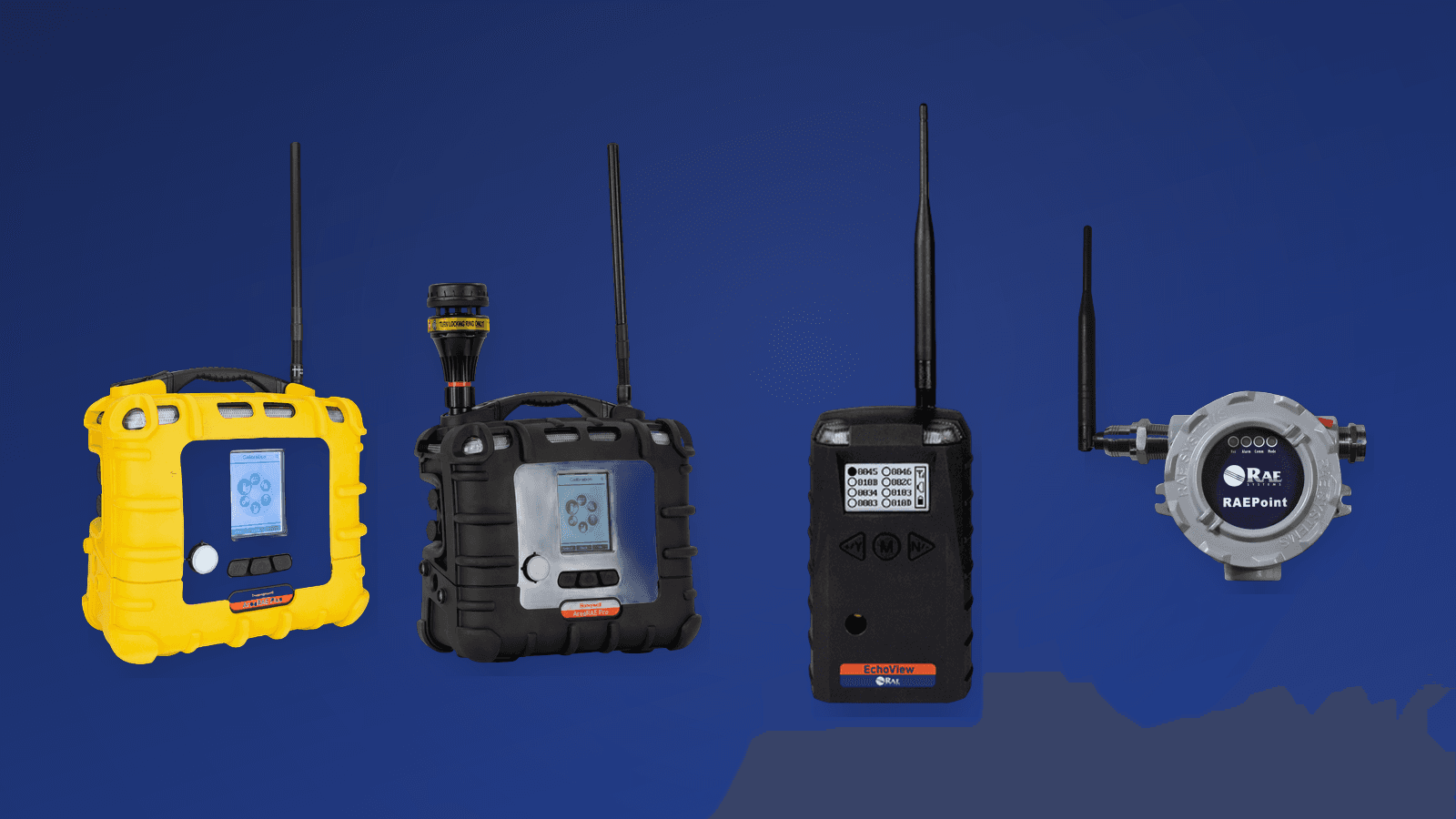
Plant shutdowns and turnarounds concentrate people, residual process chemicals and temporary work in a small area. Wireless gas detection for shutdowns adds a layer that safety coordinators can actually see: transportable area monitors at the fence line and around confined space jobs, with readings and alarms sent to a command point.
Honeywell RAE Systems covers that temporary network with the AreaRAE Plus and AreaRAE Pro area monitors, the RAELink 3 wireless transmitter, the RAEPoint wireless router, and the EchoView Host mini-controller. Wearable instruments such as the MicroRAE, QRAE 3 and MultiRAE can sit on the same wireless picture when they are configured to do so.
Why shutdowns need more than a clip-on monitor
Atmospheric hazards can include residual hydrocarbons and VOCs, inerting gases that displace oxygen, and toxic residuals such as hydrogen sulfide. A wearable detector warns the person who is already in the plume. An area monitor, placed upwind and downwind or at the work boundary, gives the permit hut or command post a chance to see the same event and to track how a release is moving.
Wireless matters because the command post is rarely standing next to every work area. AreaRAE’s ConneXt-compatible ISM, Wi-Fi and mesh options are intended to move readings and alarms onto a display that a supervisor can watch.
Transportable area monitors: AreaRAE Plus and AreaRAE Pro
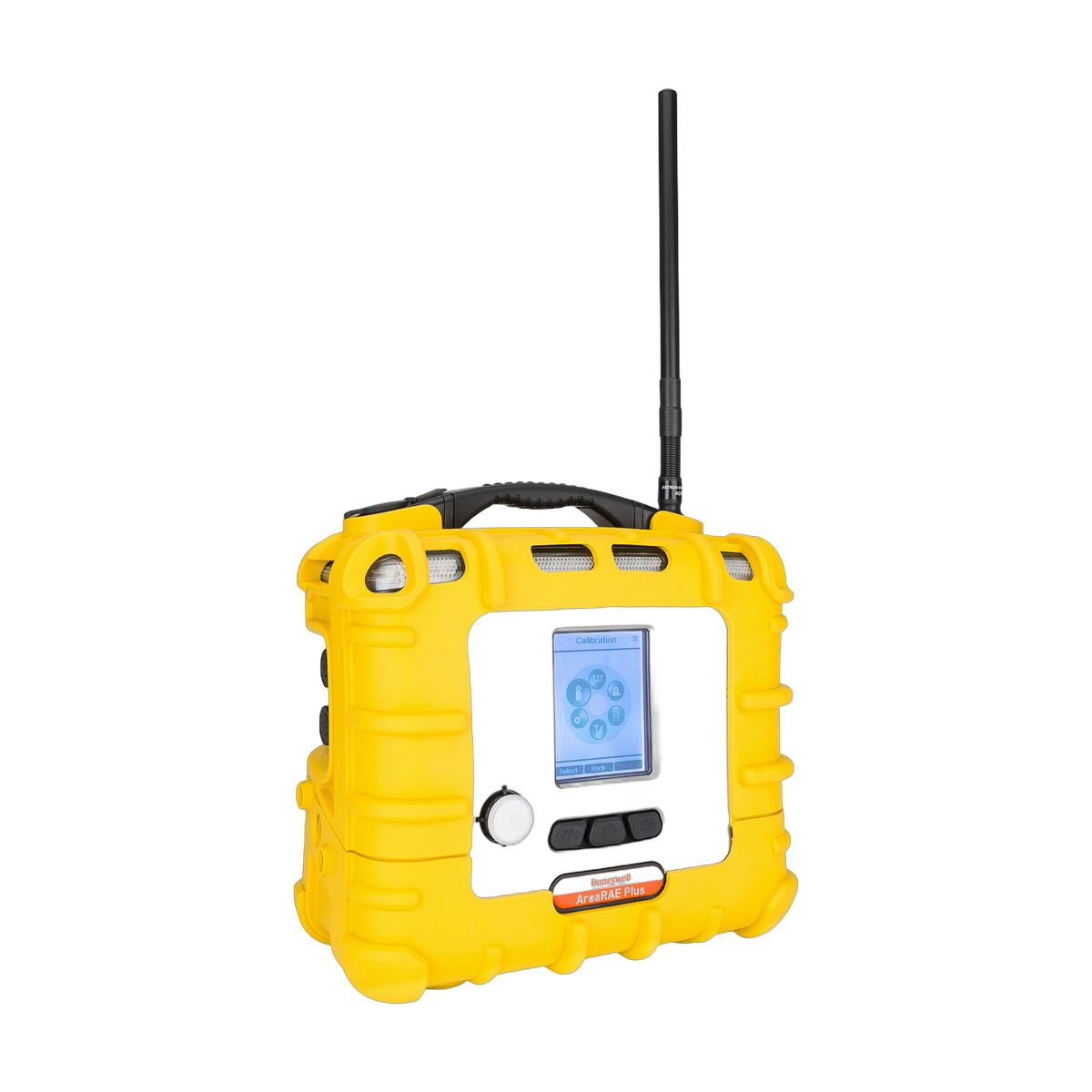
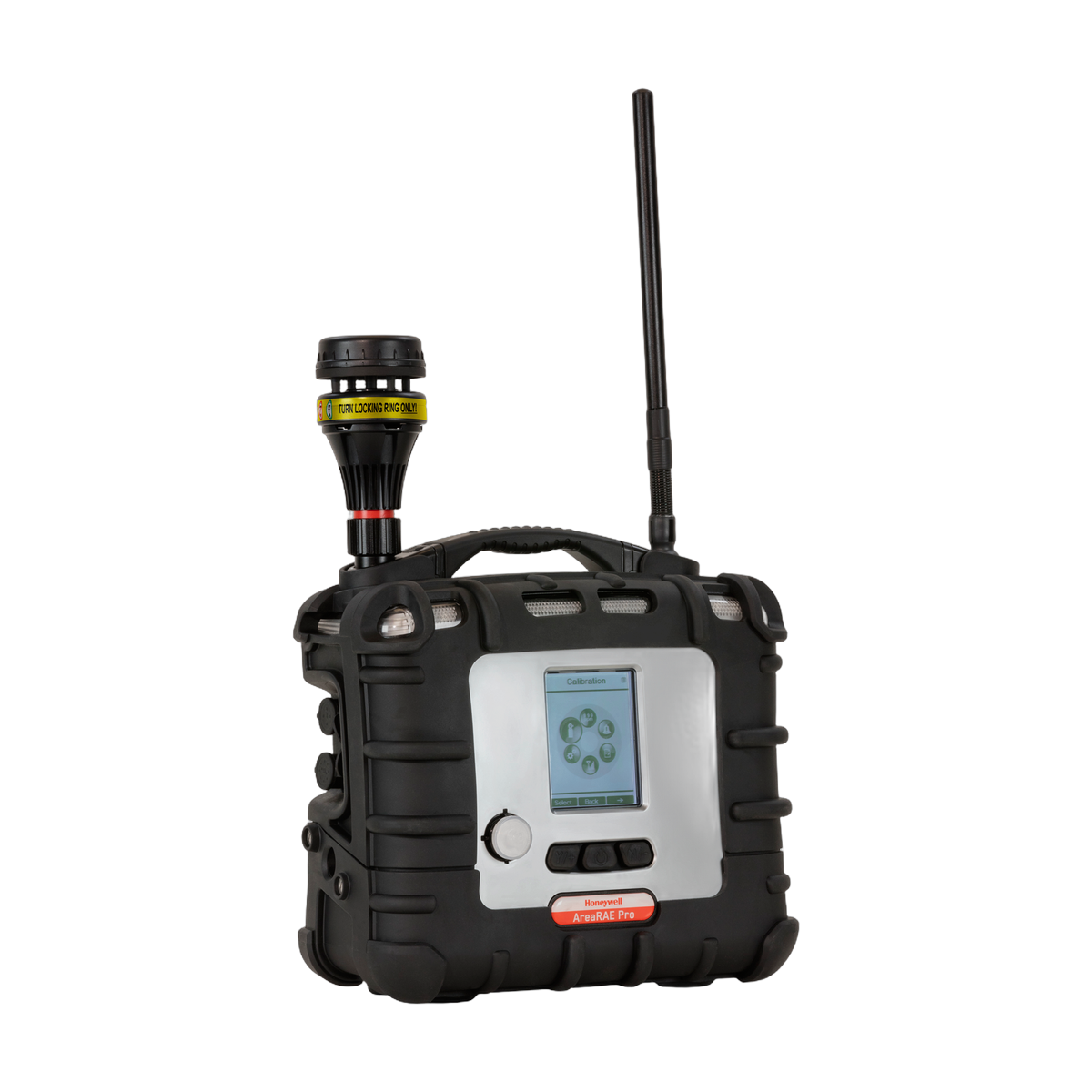
The Honeywell AreaRAE Plus is a wireless, transportable area monitor for toxic and combustible gases, volatile organic compounds and optional weather data. It can watch up to seven threats at once. Up to six 4R+ sensors cover toxic and combustible gases, chosen from a pool of around 20 interchangeable sensors, and a 7R+ photoionisation detector measures VOCs in parts per million, with temperature and humidity compensation. An optional RAEMet meteorological sensor adds wind speed and direction, temperature and humidity to support plume tracking in Honeywell remote-monitoring software.
A secondary Mesh radio can act as a communication hub for other wireless devices. The monitor is part of ConneXt Safety Solutions, with ISM and Wi-Fi configurations. Wireless range can reach up to 2 miles (3 km) on ISM 900 MHz. The housing is IP65. The lithium-ion pack provides around 20 hours with wireless on, a 108 dB alarm and 360-degree LEDs give a strong local warning, and GPS is standard.
The Honeywell AreaRAE Pro is the higher-capability sibling. It is a wireless, transportable area detector for toxic and combustible gases, VOCs and gamma radiation, with an optional local weather station. It can monitor up to seven threats, including a dedicated gamma sensor slot and ppb-level VOC measurement. It is also part of ConneXt Safety Solutions, with ISM and Wi-Fi wireless configurations, and can send wireless data to a command station up to two miles (3 km) away.
For a typical industrial shutdown, AreaRAE Plus is the usual starting point: multi-gas, VOC in ppm, optional weather, and enough wireless range to reach a site command post. Specify AreaRAE Pro when you also need ppb-level VOC measurement or gamma radiation monitoring, as in some emergency-response or specialised industrial scenarios.
How the wireless layer is built
EchoView Host for a local picture
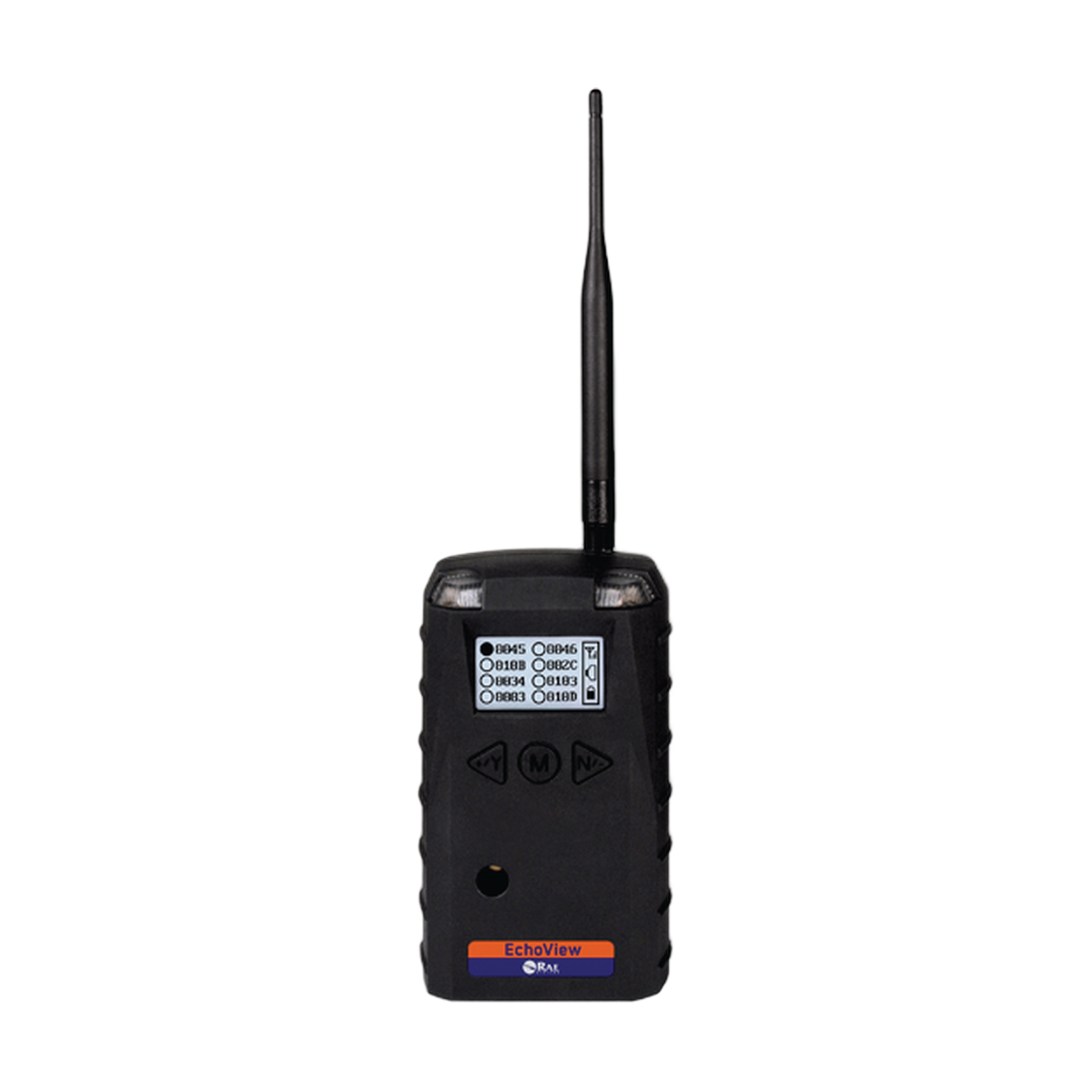
The Honeywell EchoView Host is a mini-controller for up to eight wireless RAE Systems portable monitors. It displays call names, real-time readings and alarm status. Honeywell lists a typical range of about 200 m to ToxiRAE Pro, QRAE 3 and MultiRAE instruments, and about 300 m to a Mesh Router, extendable beyond 1 km. The unit is IP-65 and intrinsically safe (Class I, Division 1, with ATEX and IECEx Ex ia I/IIC T4). A disposable lithium battery provides up to 10 days of 24/7 runtime, with 90 dB alarms and an ISM IEEE 802.15.4 sub-1 GHz radio.
EchoView is the compact field display: a shutdown supervisor can see a handful of wireless portables without a full command-truck software stack.
RAELink 3 as a portable gateway or repeater
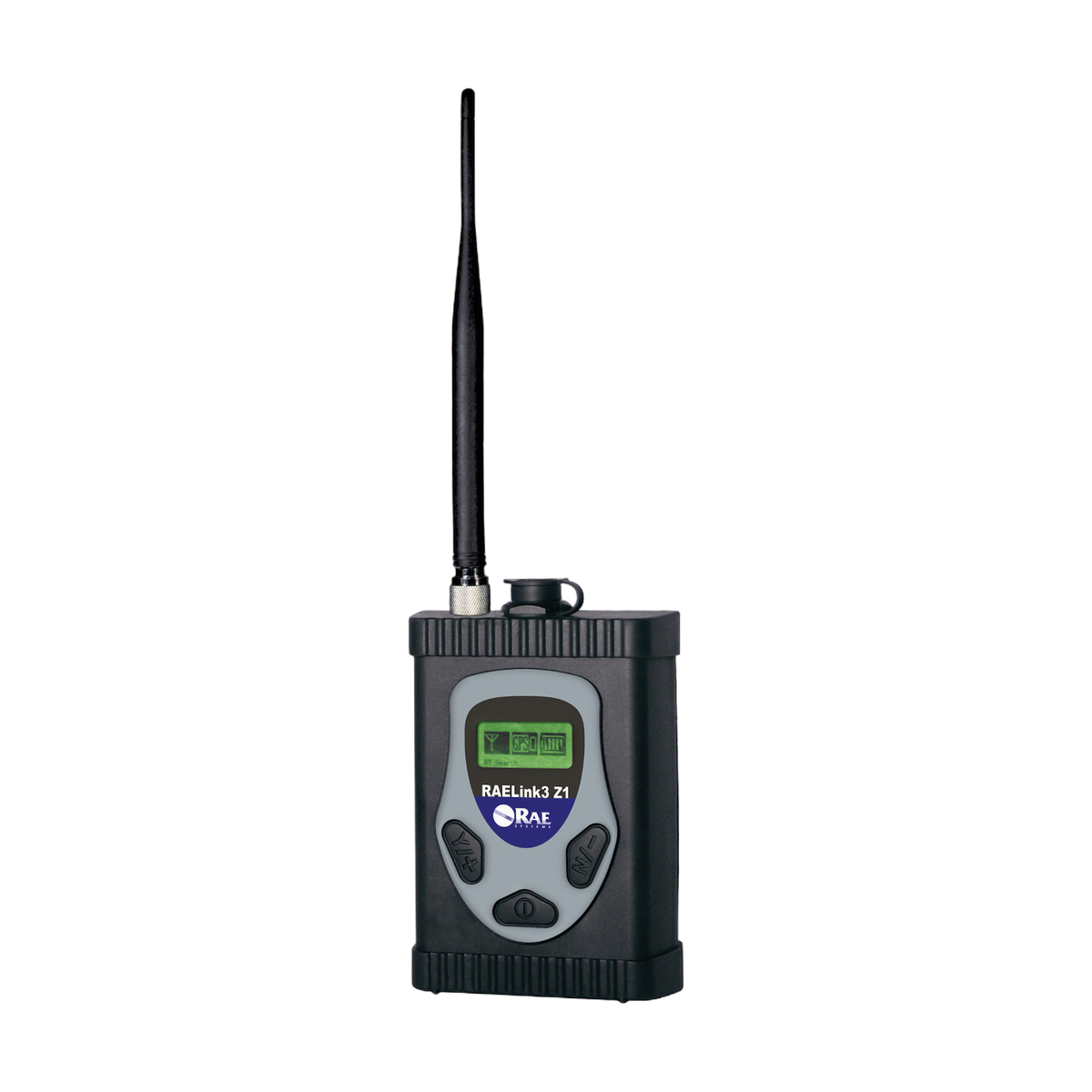
The Honeywell RAELink 3 is a wireless transmitter with GPS for RAE Systems portable monitors and select third-party devices. It can be configured as a host, a repeater or a remote gateway. Honeywell lists a range of up to about 1.2 miles (2 km) in urban settings, and up to two miles in some product descriptions. A rechargeable lithium-ion pack provides up to 18 hours of runtime. The housing is IP-65, the radio is ISM 2.4 GHz, and the listed hazardous-area rating is Class I, Division 2, Groups A–D, T4.
RAELink 3 is the portable way to extend or gather a wireless cluster when you do not want to mount a permanent router.
RAEPoint as a fixed router
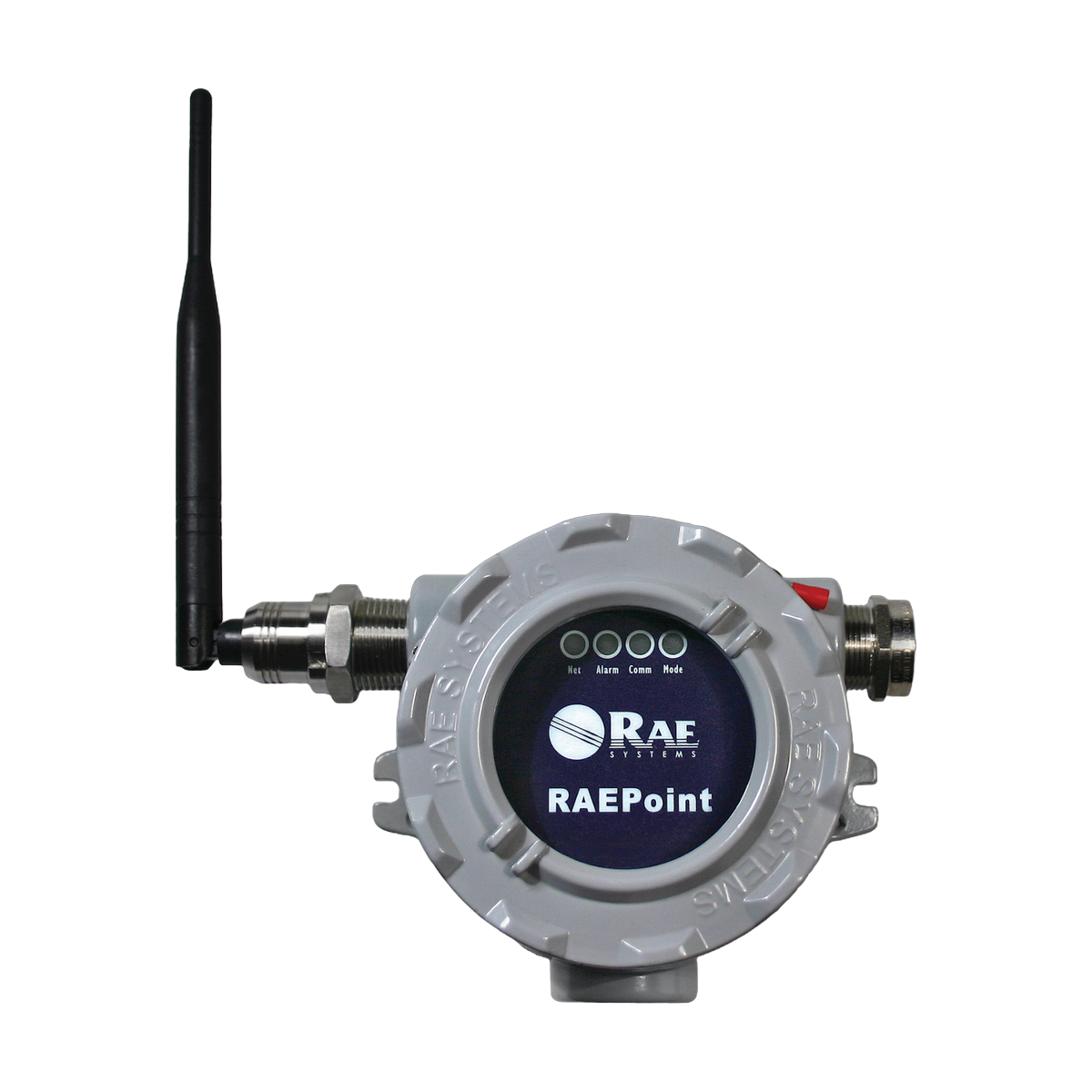
The Honeywell RAEPoint is a permanently mounted wireless router and relay for RAE Systems gas monitors. It supports up to 50 monitors and routes data to Safety Suite or an EchoView Host. Power is 12–28 VDC, in an explosion-proof Class I, Division 1 (ATEX Zone 1) enclosure. Mesh range is 1,000 ft (300 m) point to point, and LoRa range is 3,281 ft (1 km) point to point, both extendable with additional RAEPoints. Optional internal relays and an optional alarm bar (two xenon strobes and a 110 dB horn) turn the router into a local alarm point as well as a radio hop.
RAEPoint is the right building block when a plant already has, or can temporarily power, a fixed wireless backbone around the shutdown area.
A practical layout for a turnaround
- Place AreaRAE Plus (or Pro) monitors at the work boundary, at known release points, and where wind could carry a plume toward mustering or adjacent units. Add RAEMet if wind direction will change how you interpret alarms.
- Issue wearable four-gas or multi-gas monitors — MicroRAE, QRAE 3 or MultiRAE — to workers and attendants, and bring those wireless readings into the same picture where the instruments support it.
- Use EchoView Host at the local job for up to eight portable monitors, or RAELink 3 as a host, repeater or gateway when you need more range.
- Use RAEPoint routers where a powered, explosion-proof hop or a larger 50-monitor backbone is required, extending Mesh or LoRa links with additional RAEPoints as needed.
Ranges quoted above are Honeywell’s published figures. Site steelwork and radio configuration will change what you actually achieve, so confirm them on the plant.
To specify a wireless gas-detection setup for a shutdown or turnaround, request a quote from Territory Instruments. Share the size of the work area, the gases and VOCs of concern, and whether you need a local EchoView display, portable RAELink 3 links, or a RAEPoint backbone.
Frequently asked questions
What is the difference between AreaRAE Plus and AreaRAE Pro?
Both are wireless, transportable area monitors that can watch up to seven threats and belong to ConneXt Safety Solutions. AreaRAE Plus measures VOCs in ppm with a 7R+ PID and offers an optional RAEMet weather sensor and a Mesh radio that can hub other wireless devices. AreaRAE Pro adds ppb-level VOC measurement and a dedicated gamma sensor slot, with an optional local weather station.
How far will the wireless network reach?
It depends on the radio and the product. AreaRAE Plus is published at up to 2 miles (3 km) on ISM 900 MHz, and AreaRAE Pro can send data up to two miles (3 km) to a command station. EchoView Host is typically about 200 m to supported portables (about 300 m to a Mesh Router, extendable beyond 1 km). RAELink 3 is listed at up to about 2 km in urban settings. RAEPoint Mesh is 300 m point to point and LoRa is 1 km, extendable with extra units. Always confirm range on site.
Can EchoView replace a full command-station software system?
EchoView Host is a mini-controller for up to eight wireless RAE portable monitors, with a local display of readings and alarms and up to 10 days of battery runtime. It is well suited to a single job or cluster. Larger shutdowns that need many AreaRAE units and a central software view typically use the wider ConneXt or Safety Suite path, with RAEPoint or RAELink 3 providing the radio layer.
Do I still need personal monitors if I deploy AreaRAE units?
Yes. Area monitors watch the work area and the fence line. Personal monitors such as MicroRAE, QRAE 3 or MultiRAE stay with the worker. The two layers answer different questions, and a wireless shutdown setup is strongest when both are in use.