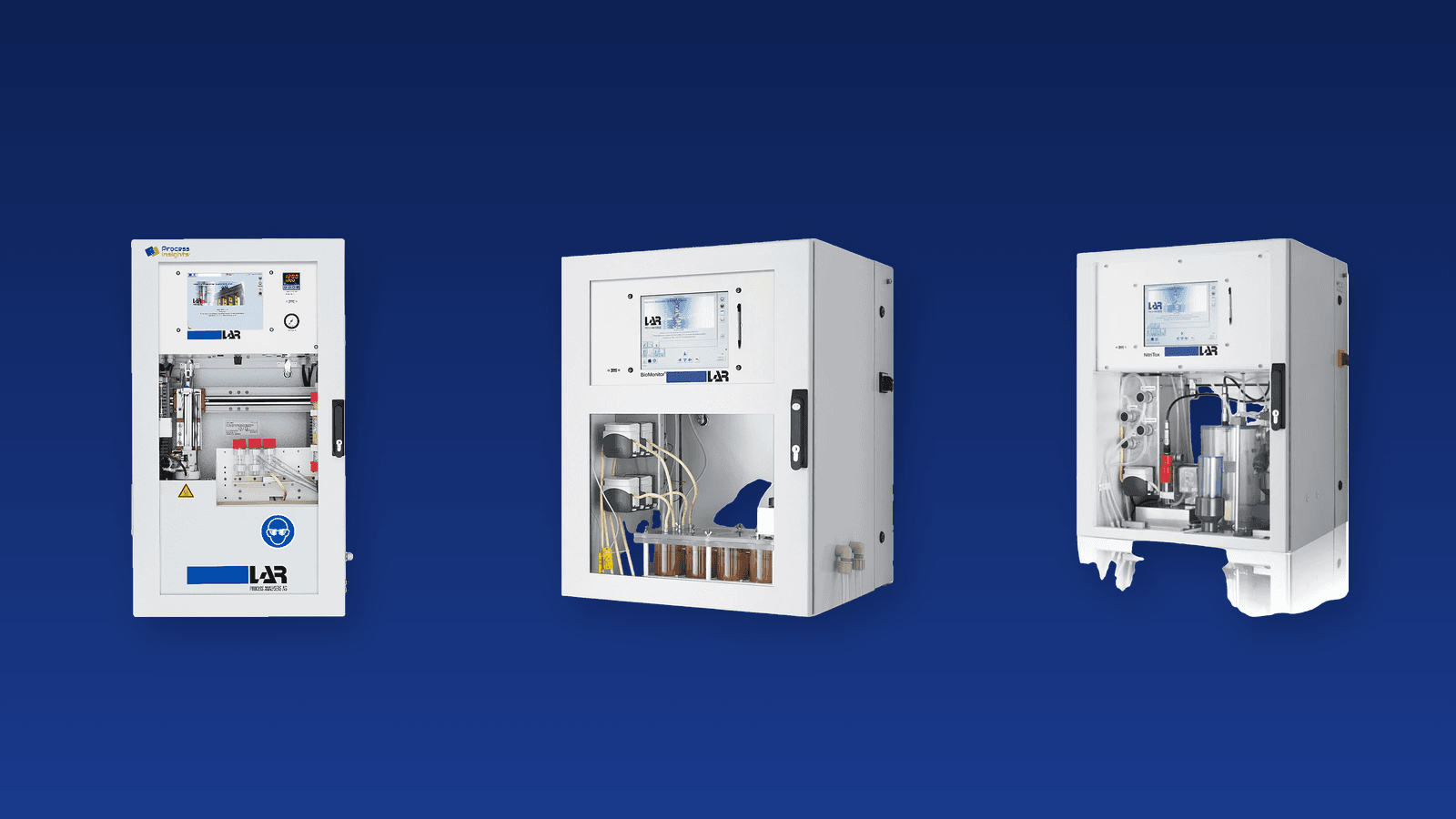
Online water quality monitoring gives wastewater and process plants a continuous picture of the organic load and health of their water, rather than a laboratory result days later. The four parameters most plants ask about are total organic carbon (TOC), chemical oxygen demand (COD), biochemical oxygen demand (BOD) and toxicity. Each answers a different question, and each needs a different measurement.
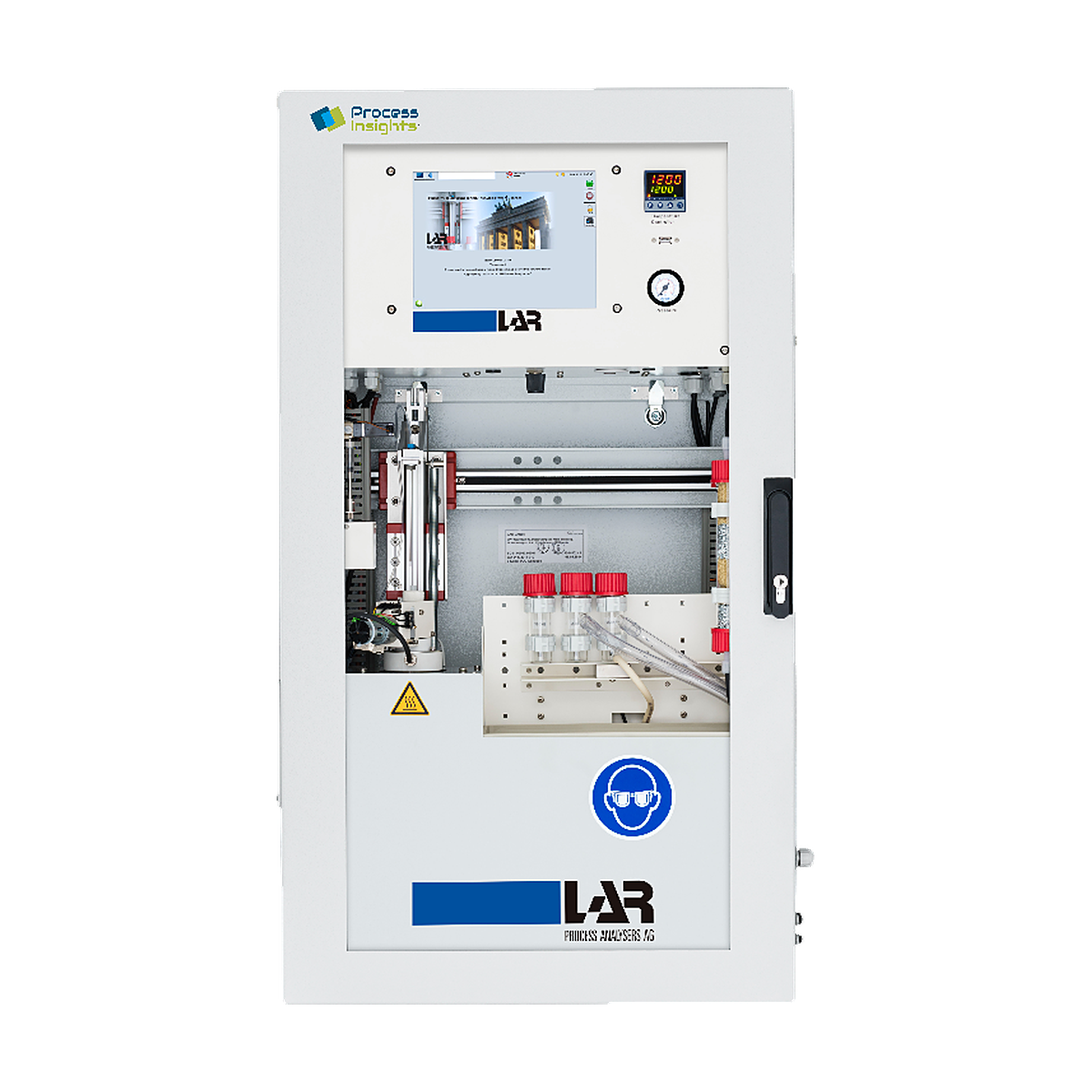
LAR analysers from Process Insights cover all four, from the QuickTOCultra for TOC to the BioMonitor for BOD and the NitriTox for toxicity. This guide explains what each parameter tells you and how the analysers measure it.
TOC: how much organic carbon is in the water
TOC measures the carbon bound in organic compounds. It is a direct, fast indicator of organic contamination and is used from wastewater through to ultrapure water.
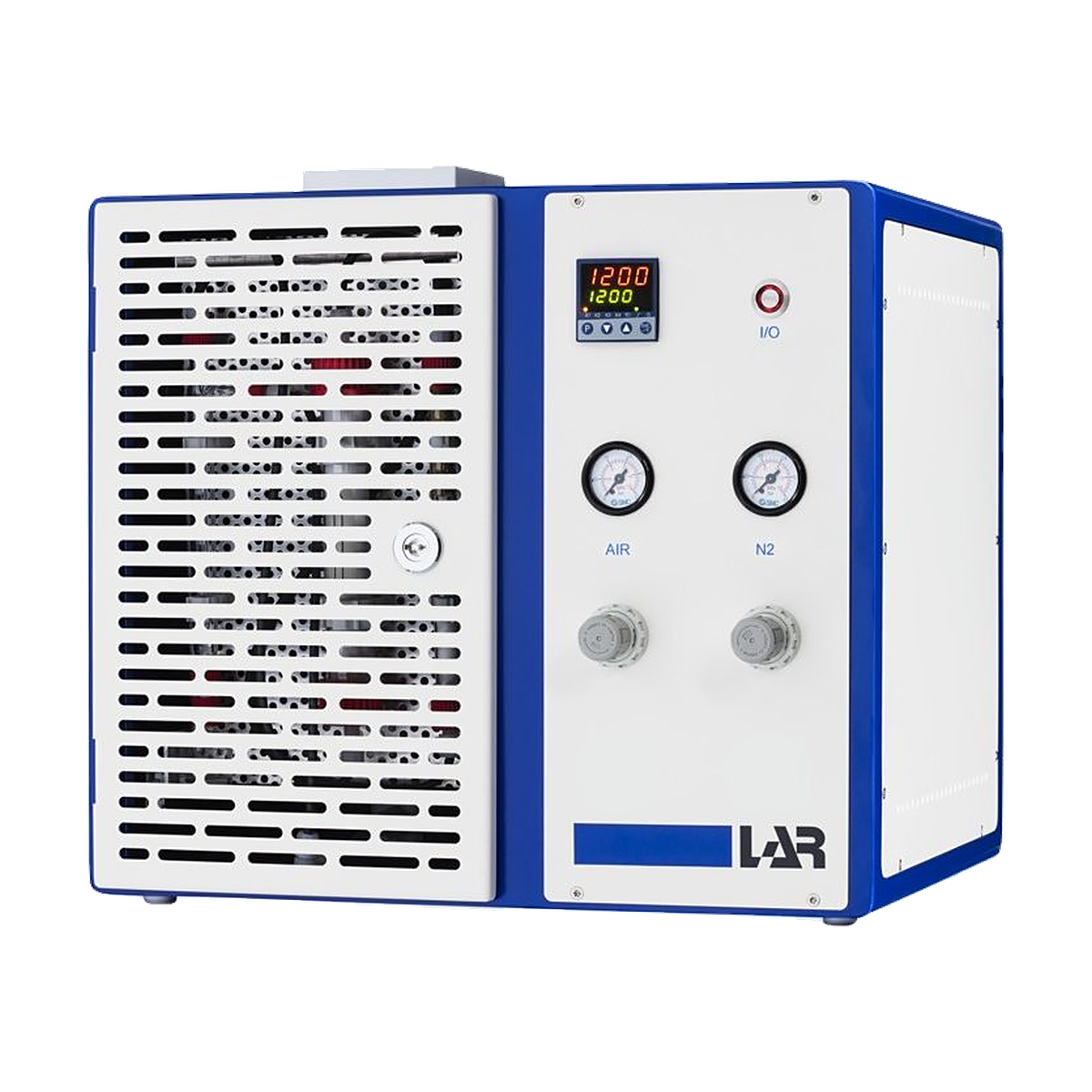
- The QuickTOCultra oxidises the sample thermally at 1,200 °C, in line with DIN EN 1484, ISO 8245, EPA 415.1 and ASTM D-5173.
- It covers 0.1 to 50,000 mg/l TOC, with dilution up to 500,000 mg/l, and reports TOC, TC and TIC, with COD and TNb as options.
- Response is about 3 minutes, with accuracy and repeatability of 2% of full scale. The standard IP54 housing can be upgraded to IP65 or an EXp version for Zone 1/2 hazardous areas.
COD: how much oxygen the load will demand
COD estimates the oxygen needed to oxidise everything in the sample, so it is commonly used to track the load on a treatment plant and on discharges. LAR measures it by thermal oxidation rather than wet chemistry.
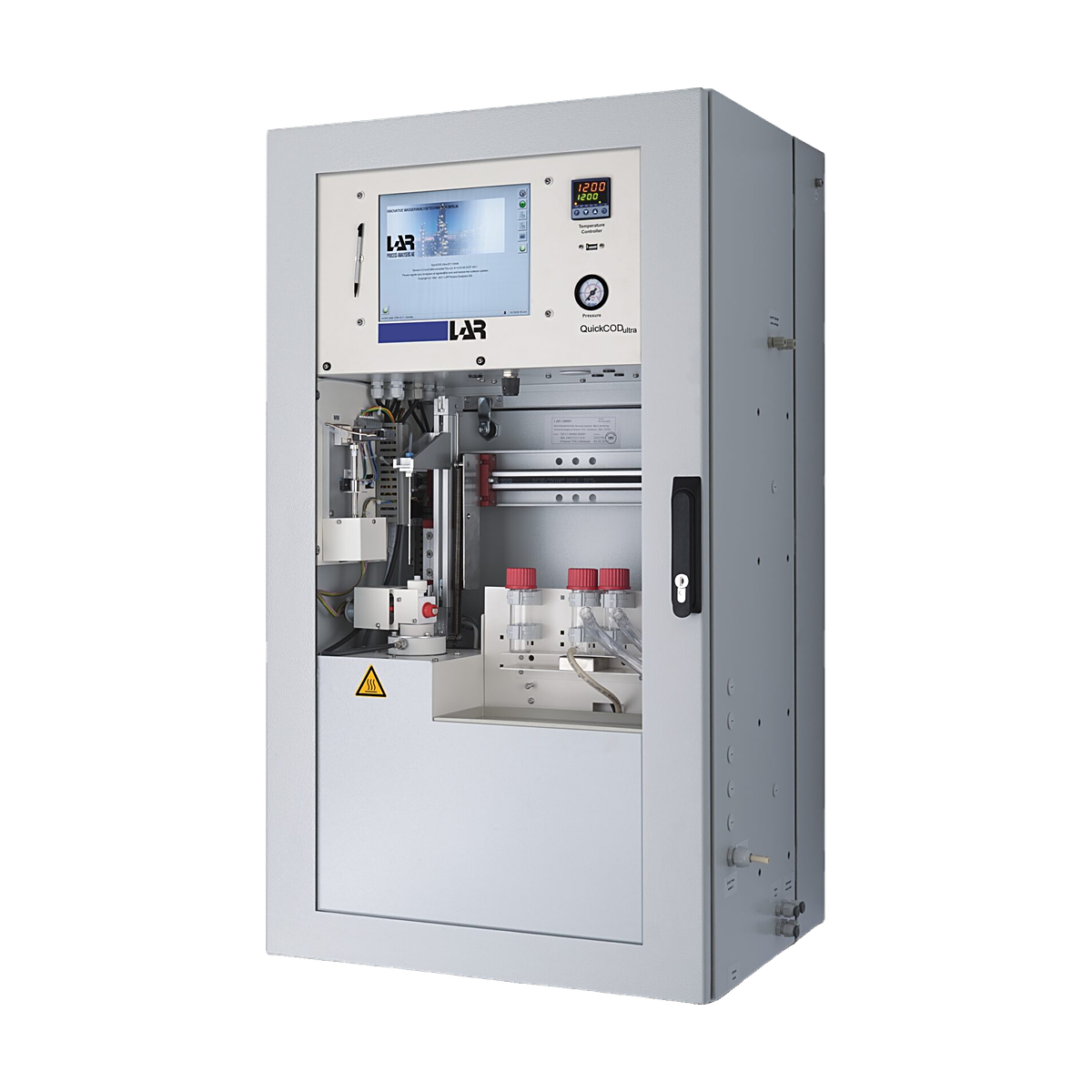
- The QuickCODultra is an online analyser that oxidises the sample at 1,200 °C without a catalyst, measuring total oxygen demand to ASTM D6238. Ranges are 150–30,000 ppm or 20,000–250,000 ppm, with dilution up to 1,000,000 ppm.
- Results take 1–2 minutes, particles up to 800 µm are accepted, and an ATEX/UKEX version is available for Zone 1 or Zone 2.
- For the laboratory, the QuickCODlab uses thermal combustion with ranges from 1–100 mg/l up to 2,000–10,000 mg/l, a result in about 3 minutes, and eSyringe or AutoSampler injection. It needs nitrogen as a carrier gas.
BOD: what the biology will actually consume
BOD measures the oxygen that microorganisms use to break down the biodegradable part of the load. The classic laboratory test takes five days, which is too slow to control a biological treatment stage.
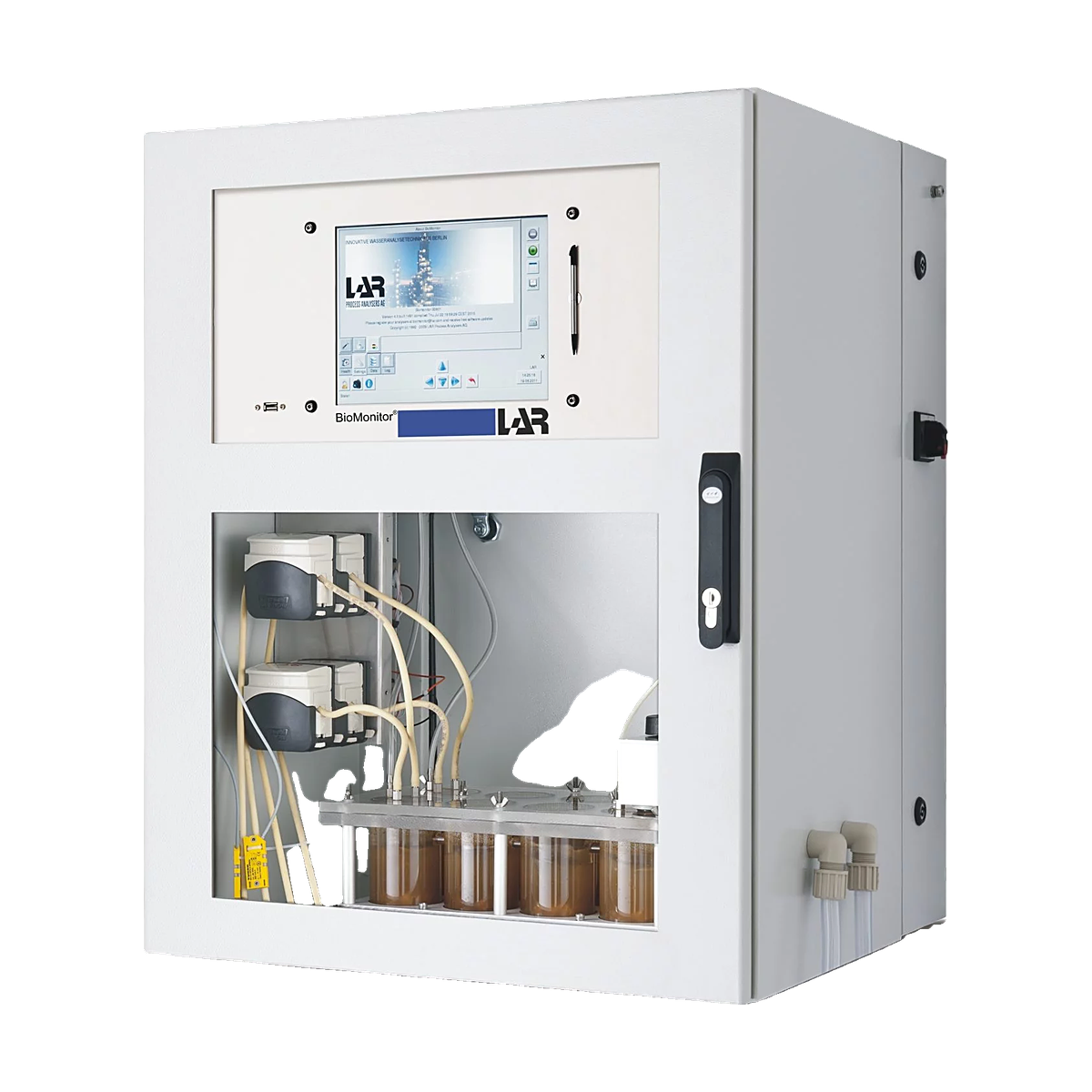
- The BioMonitor measures the respiration of active biomass in a continuous two-stream system and reports short-time BOD from 1–50 mg/l up to 1–200,000 mg/l.
- It also reports activated sludge respiration (ASR) from 0 to 5 mg/l/min, with a response from 3 to 4 minutes and accuracy of 2% of full scale.
Toxicity: protecting the biological stage
A toxic load arriving at a treatment plant can knock out the bacteria the plant depends on. Toxicity monitoring gives operators warning so they can divert or hold the flow.
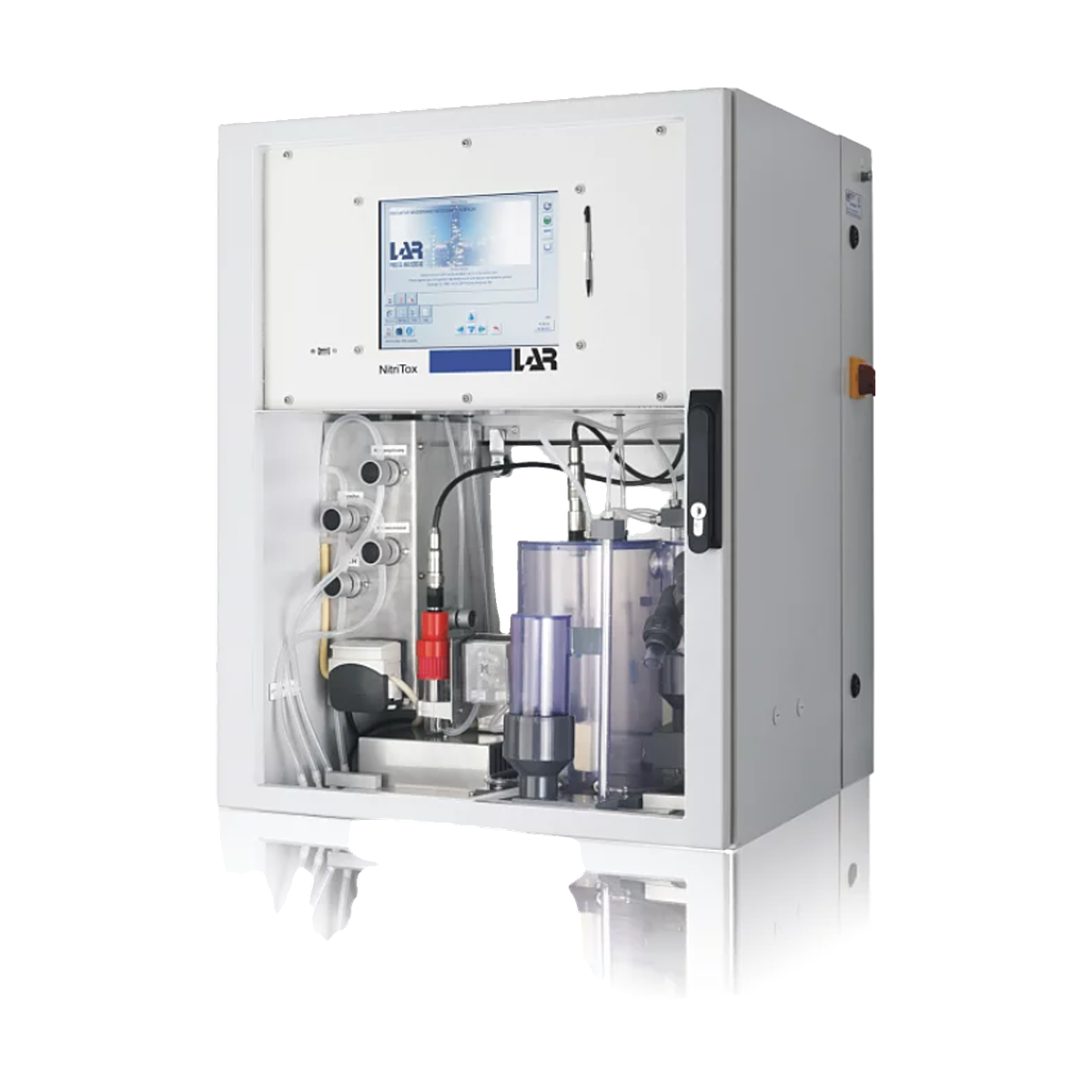
- The NitriTox measures the oxygen consumption of nitrifying bacteria, which are highly sensitive to toxins, based on DIN EN ISO 9509:2006.
- It reports 0–100% toxicity on a 12–15 minute measuring cycle with a 5 minute response, from an IP54 steel cabinet.
| Parameter | What it tells you | LAR analyser | Time to result |
|---|---|---|---|
| TOC | Organic carbon content | QuickTOCultra | About 3 minutes |
| COD / TOD | Total oxygen demand of the load | QuickCODultra (online), QuickCODlab (lab) | 1–2 minutes online; about 3 minutes lab |
| BOD | Biodegradable load and sludge activity | BioMonitor | From 3–4 minutes |
| Toxicity | Inhibition of nitrifying bacteria | NitriTox | 5 minute response, 12–15 minute cycle |
Selection checklist
- Start from the decision you need to make: discharge compliance, treatment plant control, early warning or product water quality.
- Check which parameter your licence, trade waste agreement or internal specification is written in, such as TOC, COD or BOD.
- Note the expected range, salt and particle content, and sample temperature, then match them to the analyser ranges.
- Decide between online monitoring and laboratory checks; the QuickCODlab suits sites that only need lab COD.
- Confirm the enclosure, hazardous area version, outputs and utilities against the Process Insights data sheet.
Territory Instruments can quote LAR water analysers from Process Insights with the details of your sample and application.
Frequently asked questions
What is the difference between TOC and COD?
TOC measures organic carbon only, while COD measures the oxygen needed to oxidise everything in the sample. The QuickTOCultra can report both TOC and COD as an option, and the QuickCODultra measures total oxygen demand to ASTM D6238.
Can BOD really be measured online?
The BioMonitor measures short-time BOD from the respiration of active biomass, with a response from 3 to 4 minutes, rather than the five days of a laboratory BOD test.
Are LAR analysers available for hazardous areas?
Yes. The QuickTOCultra is available in an EXp version for Zone 1/2, and the QuickCODultra in an ATEX/UKEX version for Zone 1 or Zone 2.