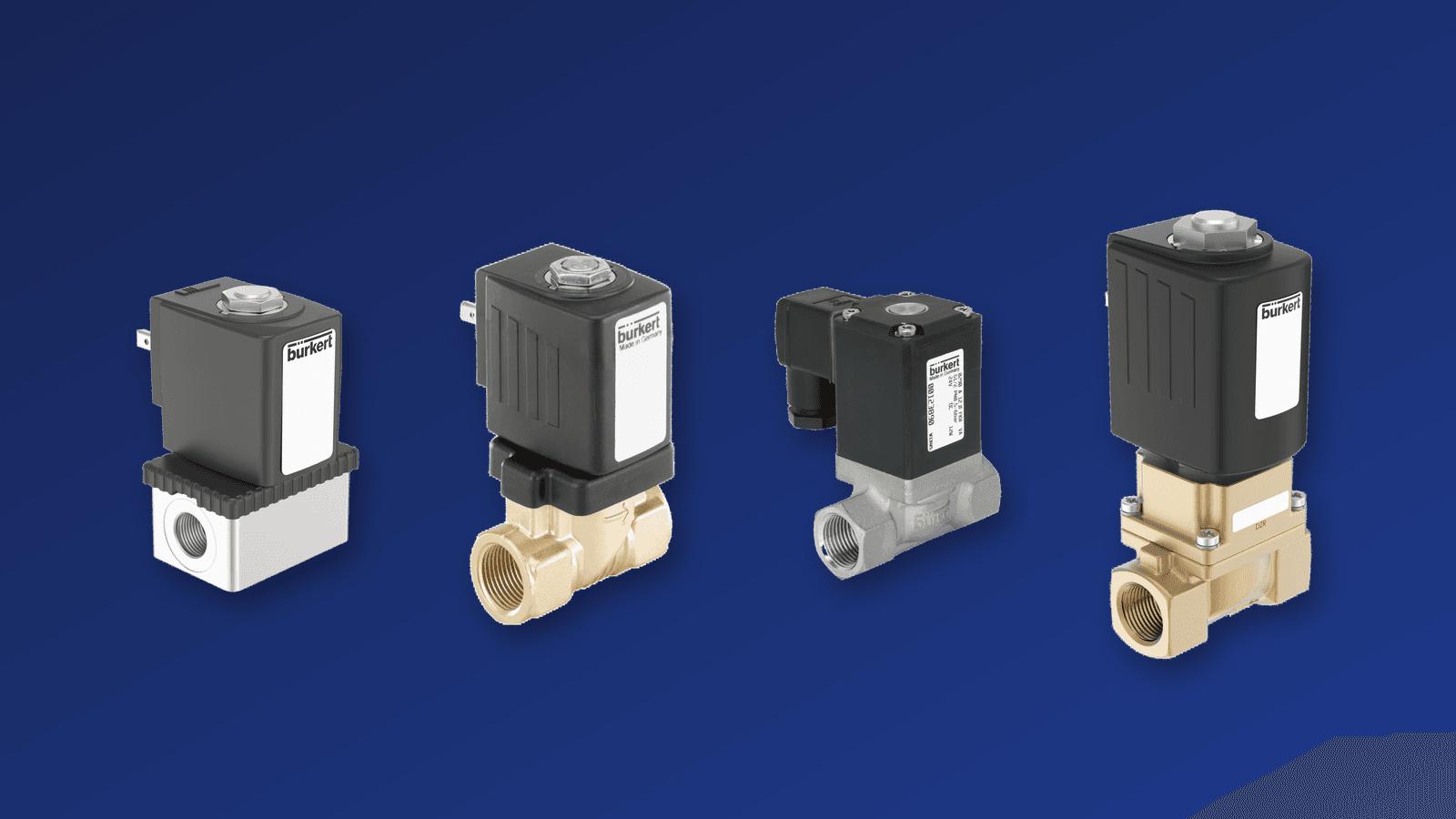
Direct-acting vs servo-assisted is the first decision in any solenoid valve specification, and getting it wrong is the most common reason a valve hums, chatters or simply refuses to open. The difference is about where the force to open the valve comes from: the coil alone, or the line pressure helped by the coil.
This guide explains both principles in plain terms and maps them to real Bürkert valves, from the compact Bürkert Type 6013 to the servo-assisted Type 6213 EV and the steam-capable Type 6407, using Bürkert's published data.
How a direct-acting solenoid valve works
In a direct-acting valve the solenoid plunger seals the orifice itself. When the coil is energised, the plunger lifts straight off the seat. Because the coil does all of the work, the valve opens from zero pressure and does not care about the pressure difference across it. The trade-off is size: the stronger the pressure and the larger the orifice, the more magnetic force is required, so direct-acting valves are usually small-orifice valves.
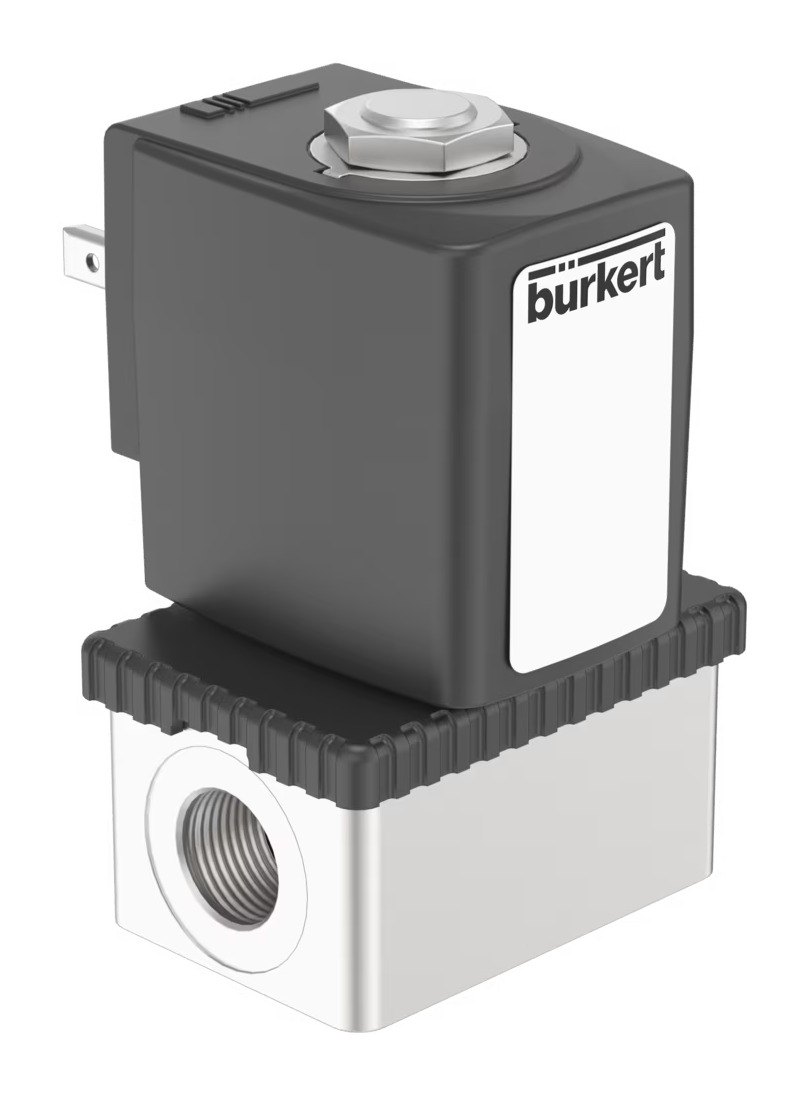
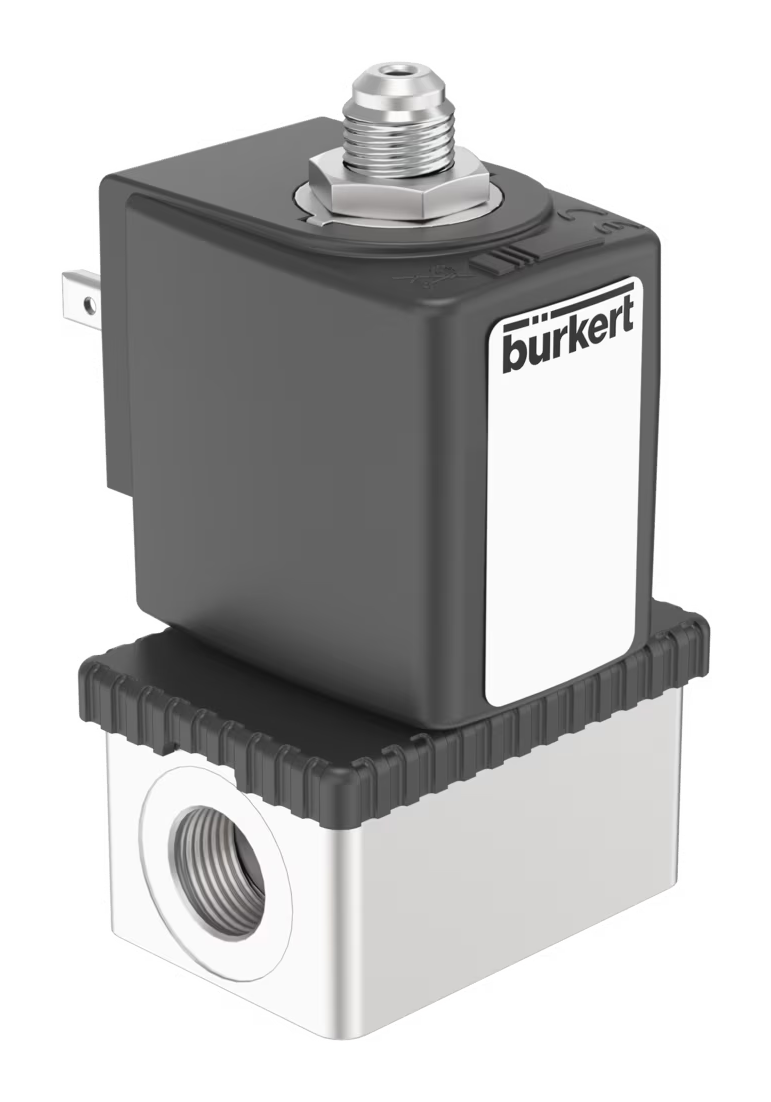
The Bürkert Type 6013 is a good example. It is a direct-acting 2/2-way plunger valve up to DN 6, with the stopper and core guide tube welded together for pressure resistance and leak-tightness, a vibration-proof bolted coil and optional Kick and Drop electronics that cut holding power. Its 3/2-way sibling, the Type 6014, uses the same construction up to DN 2.5 and is often used to pilot pneumatic actuators via a banjo fitting.
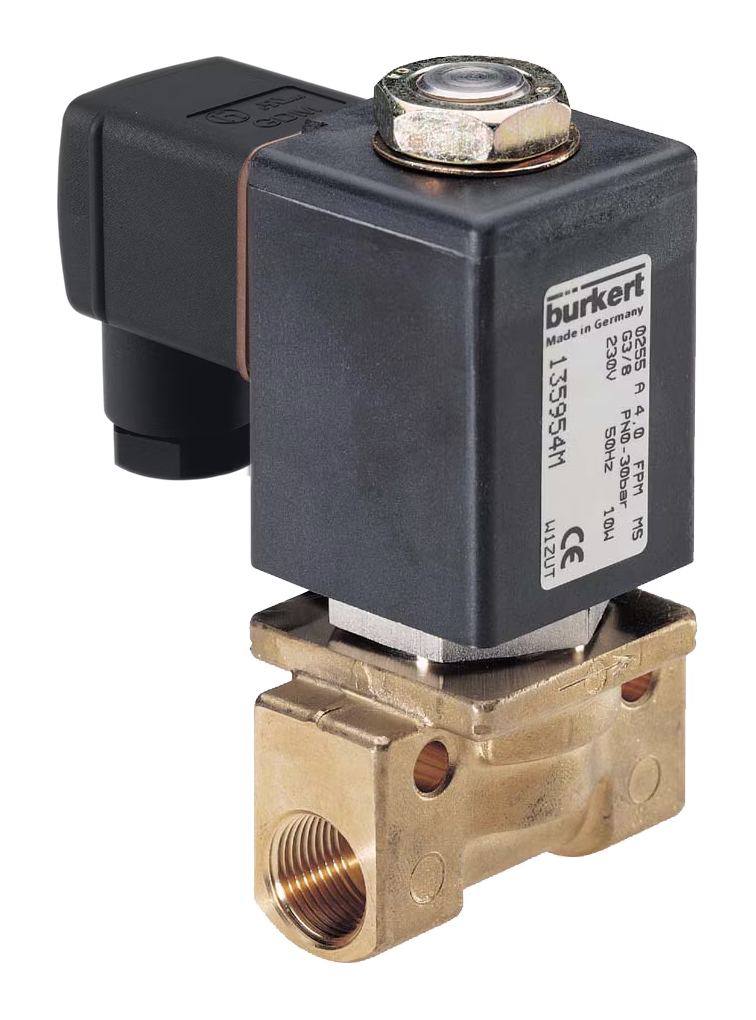
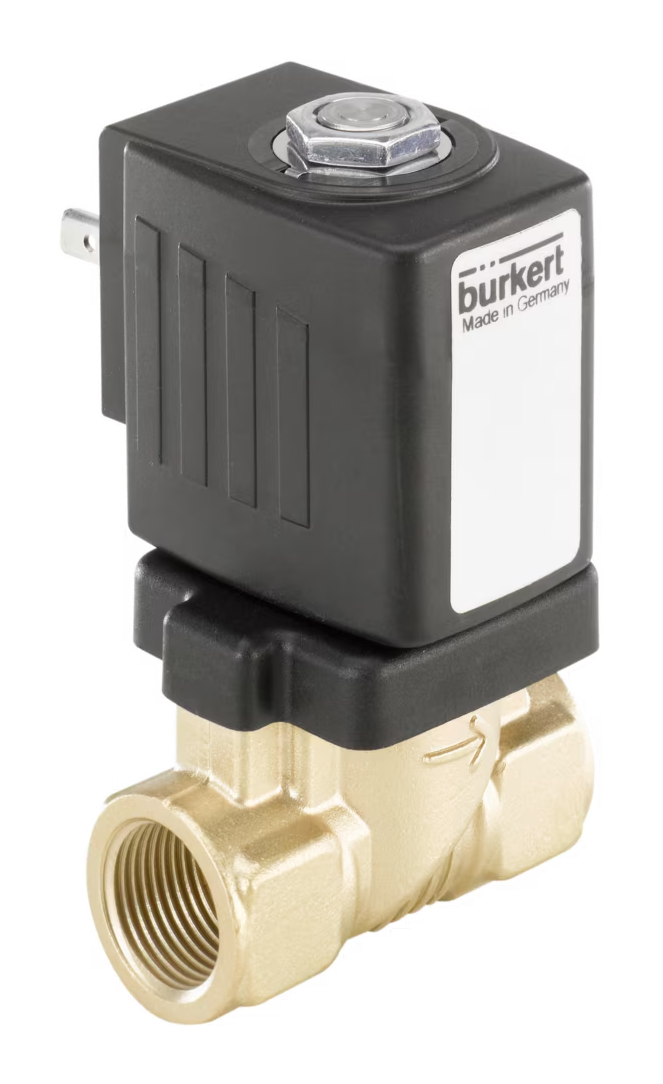
When you need more force from a direct-acting design, Bürkert scales up the coil. The Type 6027 reaches orifices up to DN 13 with special seal technology for high-pressure gases and liquids, and the Type 0255 is described as suitable for high pressures and high temperatures in a compact DN 6 body.
How a servo-assisted (pilot-operated) valve works
A servo-assisted valve uses a small pilot orifice to let line pressure do the heavy lifting. When the coil opens the pilot, pressure above the diaphragm or piston drops and the main seal is pushed open by the medium itself. That lets a modest coil switch a large orifice, but most designs need a minimum differential pressure to open fully.
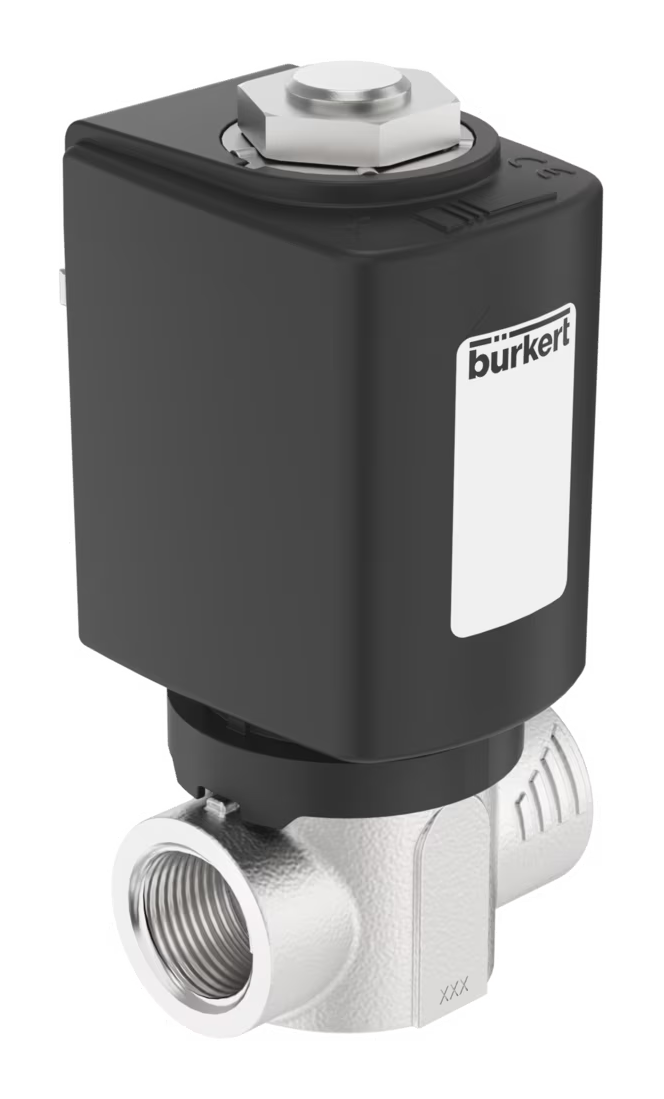
The Bürkert Type 6213 EV is a servo-assisted diaphragm valve up to DN 40. Its spring-coupled diaphragm supports opening, its damped design keeps noise and water hammer down, and Bürkert notes that the standard variant needs a minimum differential pressure, while the HP00 variant opens without one for gas and vacuum duties. The Type 5281 is a long-standing servo-assisted diaphragm valve up to DN 50, including EEx variants for hazardous areas.
Servo-assisted valves that open at zero pressure
Some servo valves mechanically couple the diaphragm or piston to the plunger, so the coil can lift the main seal even with no pressure difference. Bürkert calls this fix-coupling or hard-coupling.
- The Type 0290 is a servo-assisted diaphragm valve up to DN 50 that opens without differential pressure, with an integrated soft-kick function for gentle opening.
- The Type 6407 is a servo-assisted piston valve up to DN 50 with a hard-coupled piston. Bürkert positions it for gases and steam, as well as liquids below 0 °C.
These are the valves to look at for gravity-fed tanks, low-pressure circuits and any line where the upstream pressure can fall close to the downstream pressure.
Direct-acting vs servo-assisted at a glance
| Direct-acting | Servo-assisted (pilot) | Servo-assisted, coupled | |
|---|---|---|---|
| Opening force | Coil only | Line pressure via pilot | Coil plus line pressure |
| Minimum differential pressure | None | Usually required | None |
| Typical orifice range | Small (e.g. 6013 up to DN 6, 6027 up to DN 13) | Large (e.g. 6213 up to DN 40, 5281 up to DN 50) | Large (0290 and 6407 up to DN 50) |
| Good fit | Small flows, vacuum, pilot air, dosing | Mains water, cooling water, high-flow liquids | Low-pressure lines, steam, gases |
| Bürkert examples | 6013, 6014, 6027, 0255 | 6213, 5281 | 0290, 6407 |
Steam: diaphragm or piston?
Steam combines high temperature with condensate and pressure swings, so the sealing element matters. Bürkert's piston valves such as the Type 6407 are specifically positioned for gas and steam. Always check the temperature limits of the chosen seal material on the data sheet for your exact variant, and specify the coil and connector protection class for the installation.
What about proportional control?
All the valves above are on/off valves. If you need to throttle flow continuously, look instead at proportional solenoid control valves such as the Bürkert Type 2873 or 6223, which are covered in our guide to proportional solenoid valves.
A practical selection checklist
- Confirm the medium, temperature and the lowest pressure difference the valve will ever see.
- If the pressure difference can fall to zero, choose direct-acting or a coupled servo design such as the 0290 or 6407.
- If the orifice must be larger than about DN 6 and the pressure difference is always available, a servo-assisted valve such as the 6213 is usually the more economical choice.
- For high pressures in a small orifice, look at the 6027 or 0255.
- Check the need for explosion protection, energy-saving coils and the body material.
Send Territory Instruments the medium, pressure range, orifice or Kv and voltage, and we will quote the matching Bürkert solenoid valve.
Frequently asked questions
Why does my servo-assisted solenoid valve not open fully?
Most standard servo-assisted valves need a minimum pressure difference across the valve to lift the diaphragm or piston. If the line pressure is too low, the valve may open partially or not at all. A coupled design such as the Bürkert Type 0290 or 6407, or the HP00 variant of the 6213, opens without differential pressure.
Can a direct-acting solenoid valve be used on vacuum?
Yes. Because the coil lifts the seal directly, direct-acting valves such as the Bürkert Type 6013 work independently of the pressure difference, which makes them a common choice for vacuum and very low-pressure duties.
Which Bürkert solenoid valve suits steam?
Bürkert positions the servo-assisted piston valve Type 6407 for gas and steam. The Type 0255 is also described as suitable for high temperatures. Confirm the seal material and temperature range for your exact variant on the data sheet.
What is Kick and Drop?
Kick and Drop is Bürkert's double-coil electronics option that uses high power to switch the valve and lower power to hold it open, reducing energy use and coil heating. It is available on valves such as the 6013, 6014, 6213, 6027 and 6407.